Amanda Leland and James Workman ‘Sea Change’ in How We Fish
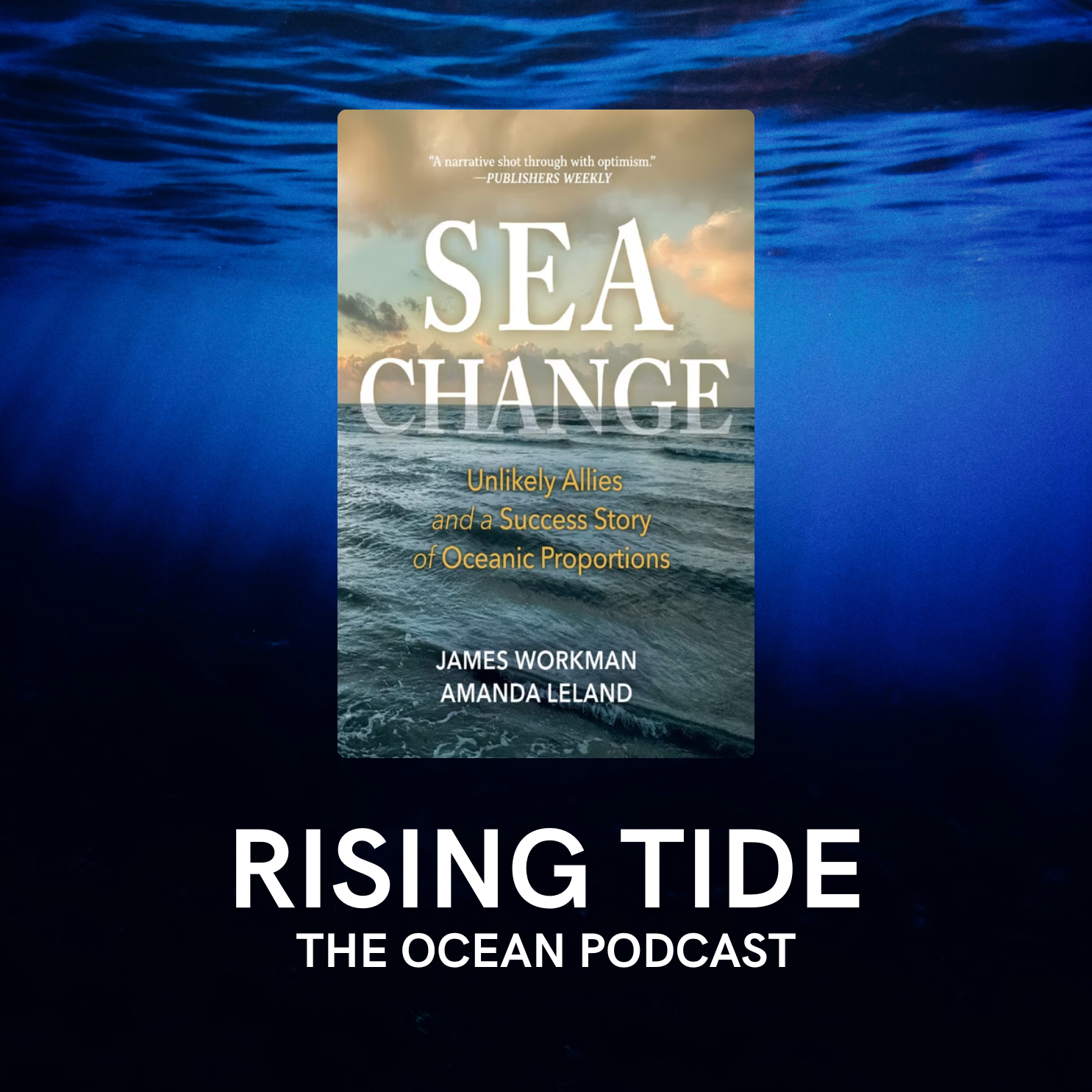
Explore the alliance between fishermen and environmentalists that is reshaping the industry and safeguarding marine life.
On the latest episode of Rising Tide the Ocean Podcast, host David Helvarg and co-host Vicki Nichols Goldstein sit down with James Workman and Amanda Leland, co-authors of Sea Change – Unlikely Allies and a Success Story of Oceanic Proportions — a book that makes a convincing case that empowering fishermen to work together, even as they compete, can create miracles.
Workman brings the instincts of an award-winning journalist and entrepreneur to the conversation, having already explored humanity's most elemental struggles in his earlier work, Heart of Dryness. Leland came to the sea the way many do — through a grandfather and a fishing line at age five — and never left. Today she serves as Executive Director of the Environmental Defense Fund, the international nonprofit working to align healthy communities and economies with the hard realities of a changing climate.
Together, they dig into the market-based system known as catch share fishing: what it is, how it's reshaping the destructive race toward overfishing in U.S. waters, and why it may be one of the most promising tools we have for getting this right on a global scale. They also explore the human cost baked into commercial fishing — still one of the deadliest jobs on earth — and how catch shares are changing those odds. And they explain their choice to tell this sweeping story through the life of one rugged Gulf Coast fisherman named Buddy, a narrative anchor that grounds the policy and the science in salt, sweat and consequence.
All of it plays out against the backdrop of a rapidly warming, rapidly changing ocean — and what that means for the millions of people whose dinner plates depend on getting this right.
A story of hope, hard-won transformation and new challenges. Dive in and take an audio bite.
Sea Change: Revolutionizing Ocean Conservation from the Ground Up
In a world increasingly threatened by climate change and overfishing, the story of transformation in our global fishing industry stands as a beacon of hope. This metamorphosis is eloquently chronicled in a recent discussion on the "Rising Tide, the Ocean Podcast," featuring Jamie Workman and Amanda Leland, co-authors of the book "Sea Change." Workman and Leland's narrative dives deep into the intricacies of a revitalized fishing industry, emphasizing the system of catch shares as a catalyst for sustainable ocean management and conservation.
A Systematic Shift Toward Sustainability
"Sea Change" paints a vibrant picture of a global industry transcending the race to depletion through structural shifts in incentives. Jamie Workman, an established author and environmental entrepreneur, talks about replacing fierce competition with collaborative creativity. Instead of individual fishermen battling for a dwindling stock, the catch share model aligns the interests of nature, public well-being, and private enterprise. This transformative approach allows communities to envision a future loaded with fish abundance and lucrative opportunities—both for now and the generations ahead. The catch share system allocates a fixed quota of the annual catch to fishermen, redefining their pursuit from capture-centric to conservation-conscious actions. Workman and Leland elaborate on how this shift cultivates a sense of shared responsibility, empowers local communities, and lights a path toward global conservation endeavors.
Fostering Human Drive and Initiative
Amanda Leland, who spearheads the Environmental Defense Fund, stresses the significance of human agency in driving these transformations. Such systemic changes require strong leadership and intrinsic motivation, a core message of "Sea Change." The book sheds light on compelling stories, like that of 'Buddy,' a skeptical fisherman who transformed into a custodian of the seas. Buddy’s change of heart from a staunch competitor to a willing collaborator symbolizes the broader narrative of industry-wide renewal. Under this model, fishermen are not just catching; they're investing in their ecosystem, forming alliances with environmentalists, scientists, and regulators. Such cooperation has led to groundbreaking partnerships that transcend traditional rivalries, promoting data-sharing and communal stewardship of the oceans.
Reducing Carbon Footprint: Ocean Conservation and Climate Change
As these changes unfold, the implications venture beyond mere fish counts. By ending the so-called "race to fish," the industry has witnessed reduced fuel consumption and lowered carbon footprints. Workman discusses how fishermen like Buddy have realized astronomical savings, a result of no longer needing to speed out to sea with fuel-guzzling engines. The podcast also draws attention to catch shares' role in reducing the fishing industry's environmental toll. Fishermen now operate with an awareness of sustainable practice, considering both environmental and economic implications. By creating incentives for conservation, the catch share model fortifies the long-term viability of ocean resources.
Global Applications and the Path Forward
Though primarily focused on the U.S., the principles of catch shares have started to influence global practices, pointing to broader potential applications. Leland points to Belize, where local communities have successfully adopted similar systems, seeing a dramatic reduction in illegal fishing activities and an increase in community accountability for marine health. As ocean ecosystems face unprecedented challenges from climate change, the adaptable and resilient infrastructure offered by catch shares emerges as a vital tool. Emphasizing collective action, this groundbreaking strategy looks toward nurturing an intimate connection between communities and the marine life they depend on.
Harnessing Local Power for Global Impact
Jamie Workman's closing statements in the podcast underline the considerable sway of grassroots movements in effecting lasting change. "Sea Change" isn't just about fisheries; it’s about reshaping humanity's relationship with natural resources at large. From water to forests, the lessons of sustainable, community-driven management extend far beyond the boundaries of our oceans. In conclusion, "Sea Change" serves as more than a narrative of resilience for the global fishing industry. It is a clarion call for systemic innovation, inviting listeners and readers to envision a world where stewardship crosses borders, science collaborates with tradition, and communities stand at the forefront of conservation success. As the conversation around environmental sustainability grows ever more urgent, Workman and Leland’s insights affirm that when people lead, even the vast ocean ecosystems can follow.
Sea Change Book — the captivating, deeply-human tale of how fishermen—along with some unlikely allies—helped carry out the biggest conservation success story you've never heard of.