


Digital Undercurrents
Questions and distributions: an exploration of important personal topics, problems, and debates, and the act of issuing materials into the world. A removable cartridge or disk, each idea functions as portable storage—something that can be inserted into different contexts, carrying structures of perception the way a color wheel carries relationships between hues. Systems appear when engaged and dissolve when removed. The judgement of the eye may be checked by the hand; perception invites verification. Some assembly may be required.
A collection of evolving notes—exploratory, loosely linked, and unconcerned with chronology. Thoughts are published mid-process, expandable and provisional, with additional materials added over time. Less polished than a traditional personal website, it operates as working media: removable, revisable, and in circulation.

Business practices can drive creativity
When we think of creativity, we often imagine it as something spontaneous — a lightning bolt of inspiration that strikes artists and visionaries. But in the business world, creativity doesn't just happen by accident. It's cultivated, structured, and driven by the very practices that keep an organization running.
Research consistently shows that creative teams outperform their peers. They solve problems faster, adapt more readily to change, and produce ideas that move markets. But here's what many leaders overlook: creativity isn't just a personality trait reserved for a lucky few. It's a capacity that the right business environment can unlock in almost anyone.
Innovation — the practical application of creative thinking — is what turns ideas into revenue, disruption into opportunity, and challenges into competitive advantage. And innovation doesn't emerge from chaos; it emerges from cultures and processes deliberately designed to encourage it. The businesses that grow are the ones that treat creativity not as a bonus, but as a core business function.
So the question isn't whether your organization values creativity. The question is: are your business practices actually making space for it?
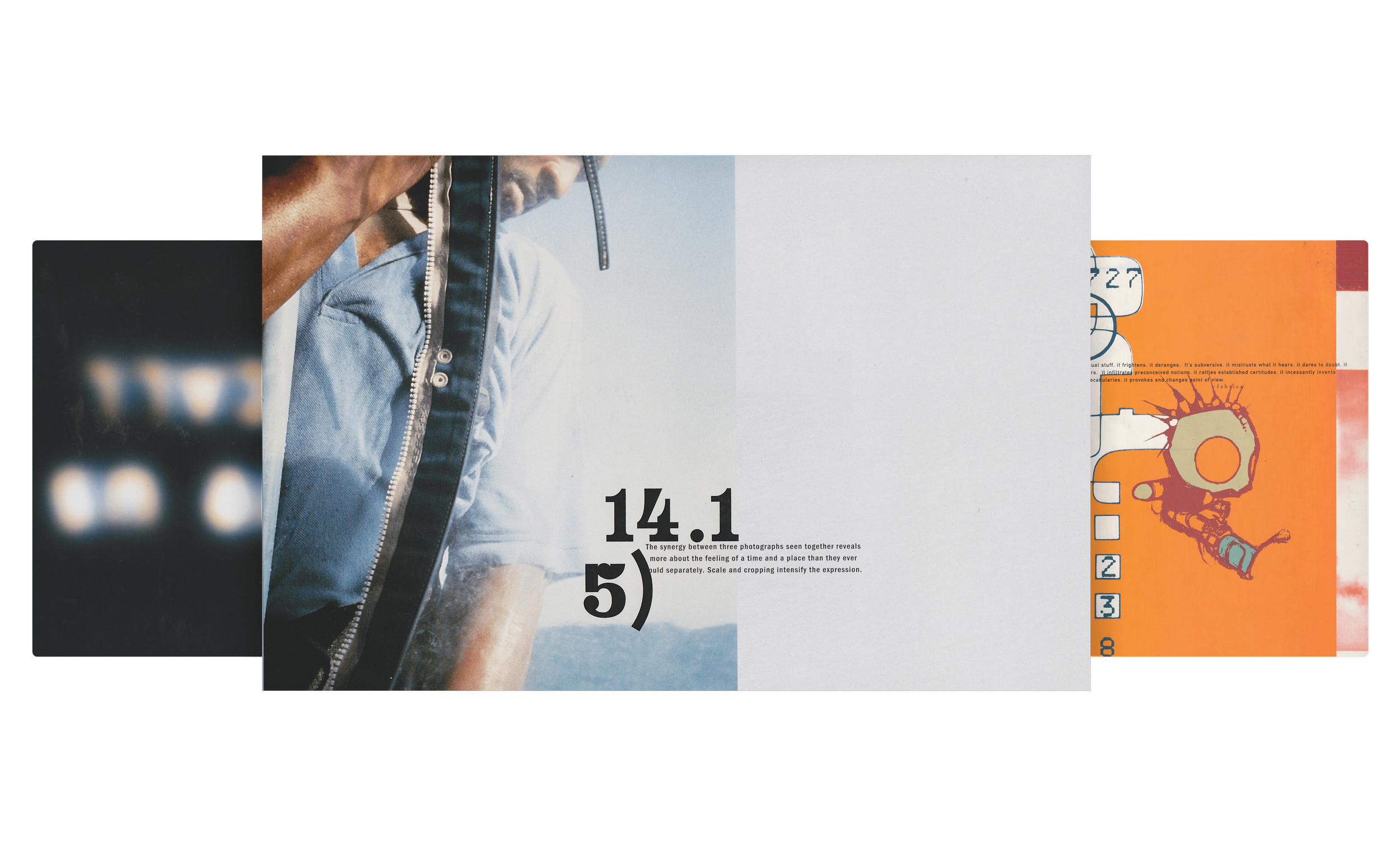
14.15)
There's something that happens when three photographs share a wall — or a page — that none of them could manage alone. Individually, each image is a document. Together, they become a atmosphere. The eye moves between them, filling in the silences, and suddenly you're not just looking at a place — you're inside the feeling of it.
Scale plays its part quietly but decisively. A detail cropped tight against a wide, breathing landscape creates a kind of visual conversation — the intimate and the expansive held in the same breath. What gets cut away matters as much as what stays. Cropping isn't reduction; it's pressure. It forces the image to mean more by showing less.
Three photographs. Three separate moments. One truth they couldn't tell apart.