


Digital Undercurrents
Questions and distributions: an exploration of important personal topics, problems, and debates, and the act of issuing materials into the world. A removable cartridge or disk, each idea functions as portable storage—something that can be inserted into different contexts, carrying structures of perception the way a color wheel carries relationships between hues. Systems appear when engaged and dissolve when removed. The judgement of the eye may be checked by the hand; perception invites verification. Some assembly may be required.
A collection of evolving notes—exploratory, loosely linked, and unconcerned with chronology. Thoughts are published mid-process, expandable and provisional, with additional materials added over time. Less polished than a traditional personal website, it operates as working media: removable, revisable, and in circulation.
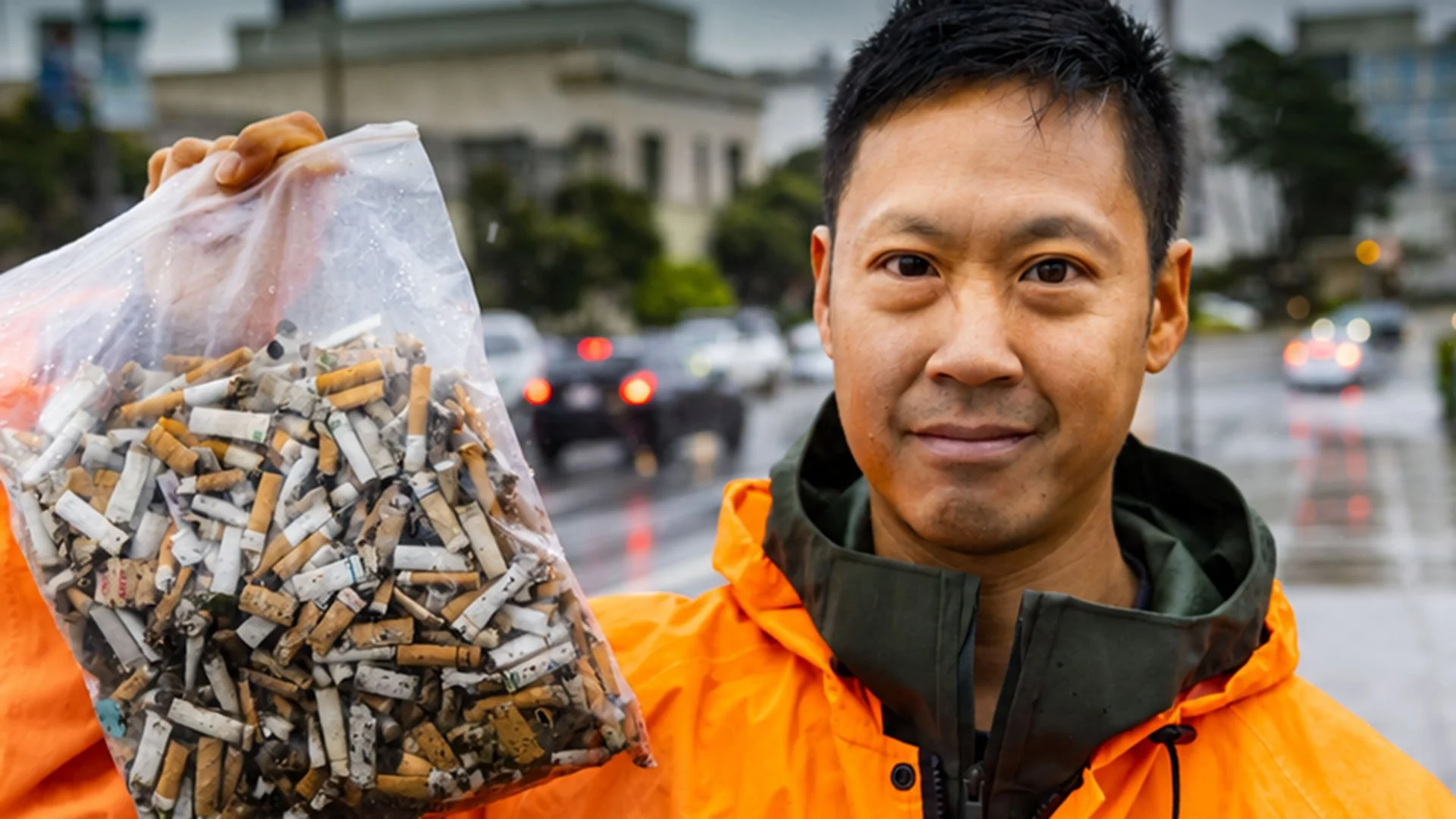
THE MOST COMMON PIECE OF TRASH IN SAN FRANCISCO MAY ALSO BE THE MOST IGNORED
San Francisco picks up after itself. Every weekend, thousands of volunteers fan out across the city's neighborhoods — buckets in hand, trash pickers at the ready — clearing what the rest of the week leaves behind. More than 22,000 residents have joined that effort, hauling away over a million pounds of trash from public spaces. By any measure, it's an extraordinary act of collective civic will.
And still, the cigarette butts keep coming back.
That's the hard truth driving a growing coalition of environmental advocates, neighborhood leaders, and community organizations to push for something bolder than another cleanup: a ban on the sale of cigarettes containing plastic filters. The proposal, modeled after legislation already passed in Santa Cruz County, would target the problem at its source — before those filters ever hit the ground, wash into storm drains, or fragment into the billions of microplastic particles that currently leach nicotine and toxic chemicals into San Francisco's streets and waterways every single year.
This isn't a fringe cause. The campaign has drawn support from 28 neighborhood organizations, more than 5,400 signatories, and eight internationally recognized experts on cigarette filter pollution. What it hasn't found yet is a single supervisor willing to introduce it.
That needs to change. San Francisco has banned Styrofoam. It has restricted indoor smoking. It has made itself a national model for environmental policy — and yet millions of plastic cigarette filters continue entering the environment here annually, cleaned up at public expense, only to be replaced the next day. The volunteers who give up their Saturday mornings understand the futility better than anyone. It's time City Hall caught up.