Dive into the Deep: Krill, Conservation, and the Cousteau Legacy
Exploring the Ocean's Secrets
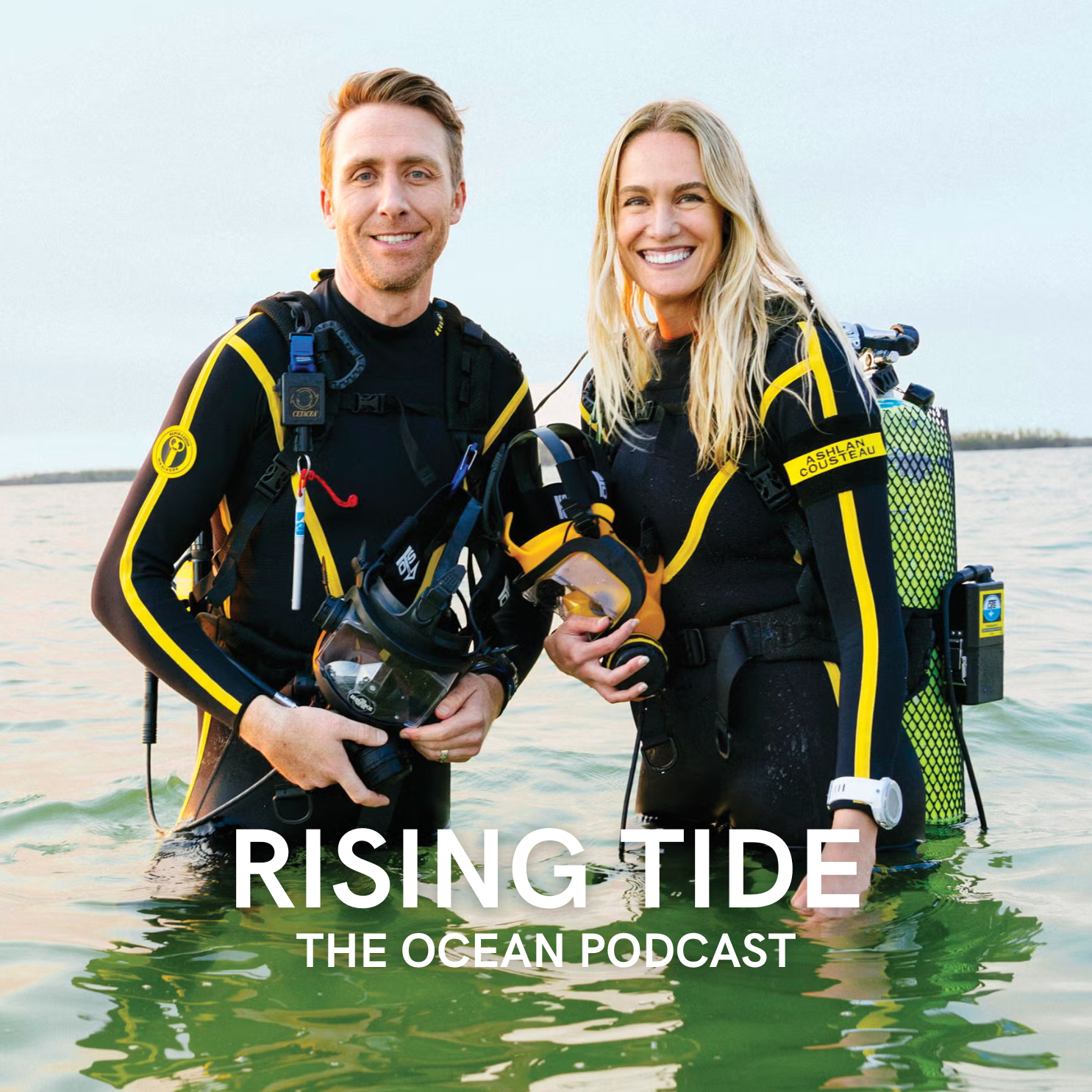
In the latest episode of Rising Tide: The Ocean Podcast, hosts David Helvarg and Vicki Nichols Goldstein welcome back two familiar voices and powerful advocates for the ocean: Philippe and Ashlan Cousteau. Five years after their last appearance, the Cousteaus return with stories shaped by urgency, experience, and a deepening commitment to protecting the planet’s most fragile marine ecosystems.
Philippe, a third-generation member of the legendary Cousteau family, and Ashlan, a former entertainment journalist turned ocean and climate storyteller, have spent the past several years producing films, influencing policy conversations, and pushing for solutions that move beyond awareness and into action.
The Quest to Save the Southern Ocean
Much of the conversation centers on Antarctica’s Southern Ocean, one of the most remote and ecologically vital regions on Earth. As board members of Antarctica 2030, Philippe and Ashlan are working to establish three large marine protected areas in Antarctic waters—an effort that has proven far more challenging than it might seem.
Under the Antarctic Treaty, all 26 countries with a scientific presence in Antarctica must agree unanimously to create new protections. That requirement has slowed progress to a crawl, even as the consequences of inaction become increasingly clear. What’s at stake is not only the future of Antarctic wildlife, but the health of the global ocean system itself.
Why the Southern Ocean Matters
The Southern Ocean is far more than a distant expanse of icy water. It is a cornerstone of the planet’s life-support system, driving ocean circulation, regulating climate, and supporting an extraordinary concentration of wildlife. At the center of it all is krill—tiny crustaceans that serve as the foundation of the entire food web.
Nearly every species in the Southern Ocean depends on krill, either directly or indirectly. Whales, penguins, seals, seabirds, and fish all rely on them. As Ashlan explains in the episode, every animal in this ecosystem eats krill or eats something that eats krill. Remove krill from the equation, and the system begins to collapse.
Krill, Carbon, and Climate
Krill’s importance extends far beyond feeding marine life. They also play a surprisingly powerful role in regulating the Earth’s climate. By consuming phytoplankton—microscopic plants that absorb carbon dioxide through photosynthesis—krill help move carbon from the surface of the ocean to the deep sea.
Through this natural process, an estimated 20 million tons of carbon are sequestered each year, largely through krill waste that sinks to the ocean floor. Interrupting this cycle by overharvesting krill risks undermining one of the planet’s most effective natural defenses against climate change.
So Why Are We Fishing Krill?
Despite their ecological importance, krill are increasingly targeted by industrial fisheries. The primary driver is the demand for omega-3 oils, which are widely used in supplements, pet food, and aquaculture feed, including farmed salmon. The irony, as Philippe and Ashlan point out, is that krill don’t produce omega-3s themselves.
Krill get their omega-3s from algae.
A Smarter Path Forward
If algae is the original source of omega-3s, then harvesting krill becomes an unnecessary and destructive shortcut. That realization helped inspire the launch of Seavoir, an algae-based omega-3 supplement designed to offer a healthier alternative for people while dramatically reducing pressure on marine ecosystems.
Algae-based omega-3s are more stable, less prone to oxidation, and easier for the body to absorb. They also avoid the environmental damage associated with industrial fishing and eliminate the need to extract nutrients from the base of the marine food web. As Philippe explains, choosing algae-based omega-3s is a simple, everyday action that can add up to meaningful change.
Protecting the ocean starts with informed choices—at the ballot box, in public conversations, and in daily habits. Supporting marine protected areas, speaking up for Antarctic conservation, and rethinking consumer products like supplements are all ways individuals can contribute to larger systemic change.
When we protect the ocean, we are ultimately protecting ourselves. The ocean regulates climate, produces oxygen, feeds communities, and connects every corner of the planet. Its health is inseparable from our own.
Storytelling, science, and action are powerful when they move together. Whether you’re deeply engaged in ocean advocacy or just beginning to explore these issues, this conversation offers a compelling invitation to care, learn, and act.